Relocating to Pensacola may have potential real estate risks which buyer’s may overlook. Instead what they often tell me is the same thing.
“I’m just looking for a good deal.”
And on paper, that makes sense. Bank-owned properties, distressed sales, and “as-is” listings can look like opportunities, especially when you’re moving from out of state and trying to be practical.
But here’s a story from a relocation client I’m helping right now that shows why those situations can quietly become risky if you don’t have the right guidance.
I was referred a wonderful client, a family member of a lender I work closely with, reach out to her here who was relocating to Florida. I had found a property that most buyers were overlooking. It was bank-owned, priced below what the previous owner paid, and on the surface looked unremarkable. The photos did not do it justice, which actually worked in our favor.
What the photos didn’t show was what mattered most.
This was the first house I showed her that day. I asked her to keep an open mind. There was a broken window, which we knew would be addressed, and the home was dirty and clearly needed paint. But once I opened the door and she stepped inside, everything changed.
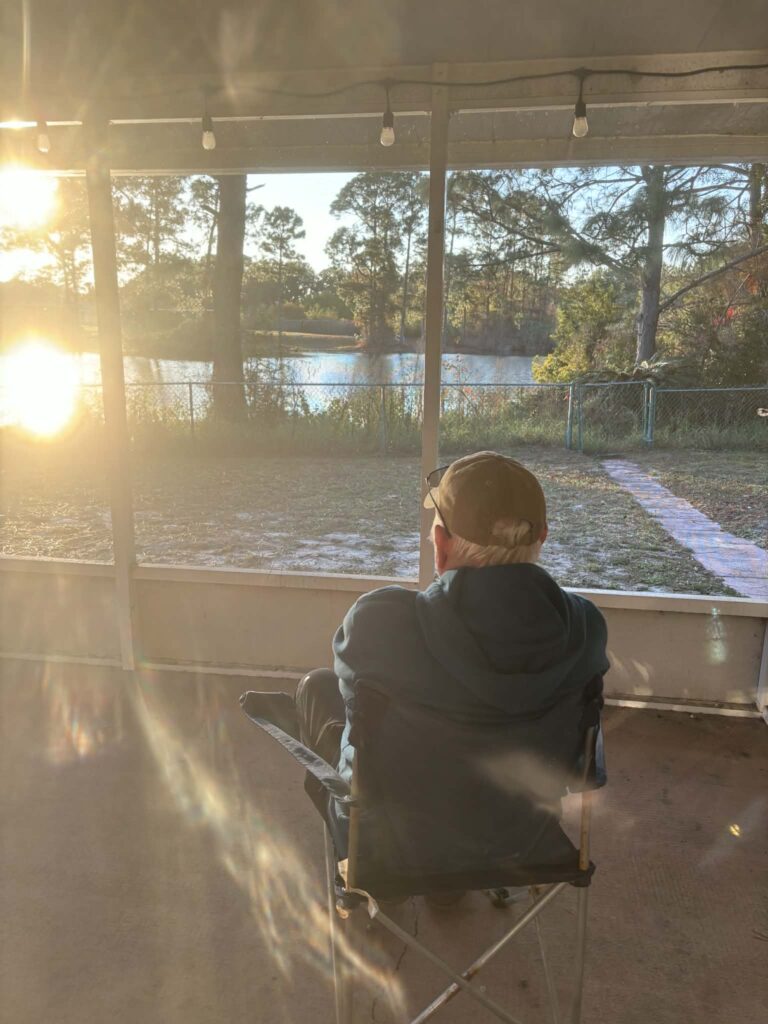
The house overlooked a lake. Light poured in through a wall of windows. You could immediately feel the potential. My client’s family are water people, and her husband was hesitant to give up the view they had back home in Texas. I knew that if I could get her on the water, this move might actually work for them.
That’s when the complications began.
What we did not know at first was that the property was subject to an HOA.
There were no disclosures. No HOA documents provided. And because this was a bank-owned, as-is sale, the seller had no obligation to supply anything. No past survey. No HOA records. The water was not even turned on.
I called the listing agent to get more information, but she had very little to share. She agreed to have the water turned on for inspection once we submitted an offer, but there was still no mention of HOA details. In Florida, that matters. Some HOAs are straightforward. Others are mandatory and notoriously difficult to deal with.
To move forward responsibly, we needed an estoppel letter to confirm dues, restrictions, and any outstanding balances. In a typical sale, the seller orders and pays for this. In a bank-owned sale, there is no seller doing that work.
The HOA would not provide the covenants and restrictions directly to me. There was no online portal. No helpful contact. No central place to retrieve documents.
So I did what experienced local agents learn to do.
I found another active listing in the same community. I reached out to that agent and asked if their seller would be willing to share the HOA documents they already had, simply as a courtesy.
That’s how we finally got clarity.
This is the part most relocation buyers never hear about.
Deals that look simple online can become document hunts. “As-is” does not just mean repairs. It often means missing information. And when you are relocating, those gaps are much harder to navigate from a distance.
My buyer was understandably concerned. Was the home financeable? Could her earnest money be at risk if something went wrong? She worried that she was already too far in.
I reassured her. Even with a lender, you can still make an offer on an as-is property. You can still ask for closing costs. And repairs are always negotiable depending on how the deal is structured.
In this case, we negotiated closing costs. We negotiated required repairs to satisfy insurance and lending requirements. Yes, I had to pay out of pocket for a thermostat when the inspection flagged the AC as nonfunctional. And yes, that cost will be credited back at closing.
Was my job harder than usual? Absolutely.
Was it worth it? Completely.
Without a local agent who understands how HOAs operate, how banks sell property, and how to track down missing pieces, buyers can easily commit to homes without fully understanding what they are buying into. They may not know what to ask for, what they are responsible for ordering, or which costs quietly fall on the buyer in these transactions.
The goal is not to avoid bank-owned or as-is properties altogether. The goal is to understand that these purchases require more protection, not less.
And when you are relocating, having someone on the ground who knows where problems hide can matter just as much as finding the right price. Sometimes, it even matters more than the deal itself.